2021 GVSU Student Reading Series Senior Showcase
Content warning: sexism, assault, sexual assault, rape
Imagine you’re walking alone in the woods, and you hear a branch break behind you. Alarmed, you whip your head around to find a massive, mangy-furred bear staring you down. Your body instantly begins its fear response. Stress hormones such as cortisol and adrenaline are released, causing your blood pressure and heart rate to increase. You might start breathing faster, and your blood flow starts redirecting to your limbs in case you need to fight or run. You may lose part of your ability to make decisions and think rationally as parts of your brain shut down and your body enters fight-or-flight.
Imagine you’re a woman walking alone in the city at night. There seems to be no one else nearby, and all of a sudden, you hear footsteps behind you. Alarmed, you whip your head around to find a massive, muscular man staring you down. He takes a step towards you, and your body is going to react in exactly the same way. Fight-or-flight kicks in, and you will do whatever it takes to survive.
Fear is something we all experience, and it consistently evokes a very physical response intended to keep us safe. But statistically, women experience fear and anxiety at higher rates than men. There are some explanatory theories related to biological differences such as hormone imbalances, and there are other explanatory theories related to societal factors and social injustices.
I was seeing a Broadway play at the Detroit Fisher Theatre and it was intermission. I was wearing a floral patterned jumpsuit, a matching long red cardigan, and short brown boots with a slight heel. It didn’t seem like a particularly masculine outfit to me. My hair was dark, wavy, and shoulder-length. I was even wearing a little bit of makeup.
I waited in the seemingly ten-mile long line for the women’s restroom. I stood there impatiently, scrolling through my phone to pass the time. After what seemed like at least four days, I had finally reached the front of the line.
There was a small blonde woman washing her hands at the sink. She looked to be probably in her mid-fifties; she wore a solid color blouse and a floral-patterned scarf. I entered the restroom and headed towards the nearest stall, and she turned her head to look at me. As her eyes rapidly scanned me up and down, she abruptly gripped the collar of her shirt and let out a shockingly loud sound that was equal parts gasp and scream.
A hush fell over the crowd of full-bladdered women as they all turned to stare at me. A moment passed, and then the white fear in the floral scarf lady’s eyes faded. She put her hand on her heart and let out a massive sigh of relief.
“Oh thank god,” she said. “I thought you were a man or something!”
For the purpose of clarification, I am a cisgender woman. I have never really questioned my gender, but it has certainly been questioned by others around me. I’ve been known to wear the occasional button-down shirt, but I typically present myself in a moderately feminine manner. Despite all this, I am mistaken for a man on the regular. The reason, I suppose, is my height.
I am alarmingly and, as some may say, horrifically tall. According to the CDC, the average height of an American woman is about 5’3”. The average height of an American man is about 5’8”. I, however, stand at a daunting 6’3”. It’s not common for men to be that tall, and it’s particularly rare for women. Consequently, when it’s dark outside or people get merely a brief glance, they will occasionally mistake me for a man. This phenomenon has blessed me with a taste of that precious male privilege everyone is raving about.
Earlier this year, I had to make a phone call to schedule an appointment for an oil change. The phone was answered by a gruff middle-aged man, one who was skilled at working with cars but struggled in the communication department. I explained to him that I needed an oil change and it should be free because my car was still under warranty. He chuckled at me dismissively and repeatedly asked me the same irrelevant questions as if I wasn’t capable of understanding him the first time. He cut me off and didn’t understand what I was talking about. He suggested that I ask my dad for help because clearly I knew nothing about cars and wasn’t capable of handling this appointment on my own. I was very frustrated and left the phone call feeling anxious, defeated, and very much like a woman. My dad did end up calling the same guy later that day, and within three minutes Dad had repeated the same information I had given earlier and easily straightened out the whole situation.
Later that week, I took my car in for the scheduled oil change appointment. I wore one of my most masculine button-down shirts, left my hair undone, stood up straight, and walked into the shop. I was determined to be treated with respect and for this process to be as easy as possible. I even lowered my voice a bit and made sure to speak with confidence and urgency.
The car guys were a masculine crew; many had dark beards and massive, grease-stained hands. They communicated to each other primarily through low-register grunts and growls. It was like watching a sleuth of bears roaming around a lot full of Chevys, all of them lunging at each other and at their clients in a desperate attempt to assert dominance.
They momentarily stopped their lunging as they watched me, a 6’3” person, enter the shop, radiating the underserved confidence of a man. I stared them down and stated what I needed, and I was attended to immediately. They understood what I wanted, no one asked demeaning questions, and I experienced no issues.
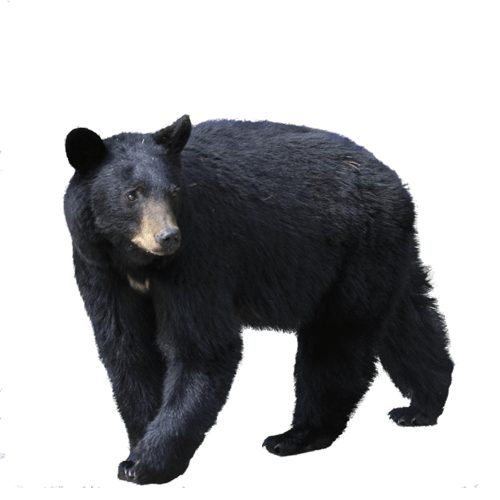
There have been many instances throughout my life in which I found men to be a lot like black bears. In fact, The Humane Society’s tips for warding off black bears are alarmingly applicable here.
- Stand and face the bear directly. Never run away from or approach him.
Don’t let the guys at car repair shops know you’re afraid. Stand your ground. If you puff out your chest and display your strength on your face, you might be able to trick them into thinking you’re one of them.
- Make yourself look as big as possible by spreading your arms or, better yet, a coat.
When a man approaches you, you have to make yourself seem bigger than he is in order to prevent him from biting your head off. Stand tall. If you’re not tall, consider investing in some stilts.
- Make as much noise as possible by yelling, banging pots and pans, or using other noise-making devices.
Speaking strongly and loudly can show a man that you’re in charge. I have not tried incorporating pots and pans, but I’m sure it wouldn’t hurt.
- If the bear approaches and you have bear spray, spray the bear as he approaches.
Bear spray certainly is strong enough to take a human man down too. Don’t let society make you think that it’s just for bears. But, if you’re in a pinch, normal pepper spray will also do the trick.
- In the very rare case that a black bear does attack you, fight back (don’t play dead).
Playing dead, historically, has not scared away many human men. If you are attacked, please be prepared to throw hands.
Most women are much smaller than I am, so it is more difficult for them to make themselves bigger to intimidate threatening bears/men. In that way, I am blessed and privileged. My height provides me with a layer of protection that many women do not have. I am not necessarily an easy target.
Sexism is very real and prevalent in our modern society. The pay gap, for example, still exists. The data shows that things have improved over the years, but the International Labour Organization reports that women still earn 81% of what their male counterparts earn (as of 2011). More women than men hold at least a bachelor’s degree, yet they are statistically paid less. Women are less likely to be in leadership positions; only 24% of CEOs in America are women (as of 2009). We also see many examples of disparities between men and women when we look at our government. This year (2021), a record number of women were elected to the senate. But does that actually mean we’ve achieved equality? The Pew Research Center states that 27% of the seats are held by women, counting The House of Representatives and the Senate. These politicians are supposed to represent the American people, yet the United States is currently 50.8% female (2019). Additionally, it would be difficult for someone to argue that men and women are viewed equally in this country when we have yet to have a single female president. Data from the Harvard Business Review actually reveals that women tend to be stronger leaders based on their ability to take the initiative, learning ability, and ability to motivate others. So why aren’t more women in charge?
One night, I decided to go for a walk in the neighborhood after the sun had gone down. There were a few streetlights that were lighting the way, but it was not enough light to be able to clearly identify faraway objects and figures.
There was a woman at the end of her driveway checking her mailbox. She had a towel wrapped around her head and was wearing furry pink slippers. I was walking towards her along the side of the road and was still a ways away. I saw her looking at me and watched her freeze in place. She stood there with her hand in her mailbox completely motionless, watching me come closer and closer. She took one cautious step backwards towards her house.
“Um, hello!” I said uncertainty as I had almost reached her driveway.
She unfroze and her shoulders relaxed as the pitch of my voice revealed to her that I was a woman. To her, this meant that she wasn’t in danger. She let out a brief sigh and displayed an awkward smile. We exchanged meaningless pleasantries and I headed on my way.
According to data from the National Sexual Violence Resource Center (NSCRC), 1 in 5 women are raped at some point in their lives. 1 in 3 women experience some sort of sexual violence during their lifetime. 91% of sexual assault and rape victims are women.
Imagine you’re walking alone in the woods. You know there might be bears in the area, and you’ve heard hundreds of stories of people who have gotten attacked and even killed. So you’ve prepared. You’re wearing a large coat to make yourself seem bigger, you have a set of pots and pans strapped to your back, and your pockets are filled with bear spray. Your heart is filled with confidence, and your preparedness has made you feel safe.
All of a sudden, you hear a series of branches breaking behind you. You turn around and find three black bears standing behind you. They look you right in the eye and rise to their hind legs, ready to attack. You’re prepared to fight and you whip out your bear spray, but as you spray one of them in the face and he stumbles backwards, the other two already have their claws drawn…
The fact that I’ve been mistaken for a man on several occasions gives me this facade of invincibility. I figure that no predator on the street would dare take me on. I am big just like a man. I know how to intimidate men, whether it’s displaying my confidence or banging pots and pans together. It sounds selfish and apathetic, but when walking alone in the city at night, I’ve often thought, “Why would anyone go for me when there are so many smaller women around?”
I was leaving a bar with a friend one night. I had parked in one direction, and he had parked in the other. I could have asked him to walk me to my car, but I told him it was fine and I’d be ok on my own. The moment he rounded the corner and I was alone, three large men emerged from an ally. It was as if they’d been watching me and waiting for my friend to leave. They started calling to me, asking me how I was, and making crude comments on my physical appearance. I didn’t respond and began quickly walking to my car. My silence made them mad. They started yelling things like, “What’s the matter babe? Don’t want to talk?” I walked faster, and to my sheer horror, all three of them started following me. The Humane Society website had prepared me to take on one bear, not three.
They continued calling to me and getting angry. I kept walking faster and faster, utilizing those excessively long legs of mine to get to my car as quickly as possible. Eventually, the men threw their hands up in the air in defeat and turned around to head back towards the ally. I made it to my car, got inside, locked the door, and took a deep, shaky breath. In that moment, my “male privilege” had been absolutely useless, and these men saw me for what I truly am: a woman.
Of course, not all men are dangerous. And not all bears are going to maul you. But we never know which ones are going to come for us, so we live in a perpetual state of fight-or-flight. We have our bear spray and noise-making devices ready at all times, but sometimes it’s just not enough. A sleuth of three black bears can still kill even the tallest of human women in a matter of minutes.
Sources
Blazina, C., & DeSilver, D. (2021, January 22). A record number of women are serving in the 117th Congress. Retrieved March 19, 2021, from https://www.pewresearch.org/fact-tank/2021/01/15/a-record-number-of-women-are-serving-in-the-117th-congress/
FastStats – body measurements. (2021, January 14). Retrieved March 19, 2021, from https://www.cdc.gov/nchs/fastats/body-measurements.htm
Gender inequality and women in the US labor force. (2011, November 23). Retrieved March 19, 2021, from https://www.ilo.org/washington/areas/gender-equality-in-the-workplace/WCMS_159496/lang–en/index.htm
Irby, K. (2016, August 19). More than half of men think sexism no longer exists, survey says. Retrieved March 16, 2021, from https://www.charlotteobserver.com/news/politics-government/article96684887.htm
Northwestern Medicine. “5 Things You Never Knew About Fear.” Northwestern Medicine, http://www.nm.org/healthbeat/healthy-tips/emotional-health/5-things-you-never-knew-about-fear#:~:text=As%20soon%20as%20you%20recognize,pressure%20and%20heart%20rate%20increase.
Research: Women are better leaders during a crisis. (2020, December 30). Retrieved March 19, 2021, from https://hbr.org/2020/12/research-women-are-better-leaders-during-a-crisis
Statistics. (n.d.). Retrieved March 19, 2021, from https://www.nsvrc.org/statistics
The criminal justice SYSTEM: STATISTICS. (n.d.). Retrieved March 19, 2021, from https://www.rainn.org/statistics/criminal-justice-system
“Stress and Gender: 2011.” American Psychological Association, American Psychological Association, http://www.apa.org/news/press/releases/stress/2011/gender.
U.S. census bureau QUICKFACTS: United States. (n.d.). Retrieved March 19, 2021, from https://www.census.gov/quickfacts/fact/table/US/LFE046219
What to do about black bears. (n.d.). Retrieved March 19, 2021, from https://www.humanesociety.org/resources/what-do-about-black-bears#:~:text=Stand%20and%20face%20the%20bear,or%20using%20other%20noisemaking%20devices.“Women’s Increased Risk of Depression.” Mayo Clinic, Mayo Foundation for Medical Education and Research, 29 Jan. 2019, www.mayoclinic.org/diseases-conditions/depression/in-depth/depression/art-20047725.
 Leah Erben